
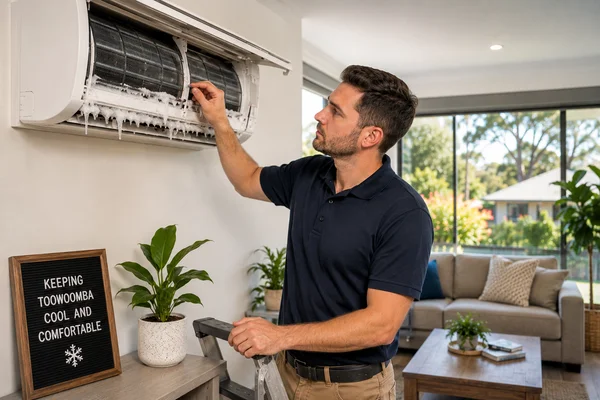
A frozen air conditioner can be a frustrating problem, especially during a hot Toowoomba summer when you rely on your system to keep your home comfortable. Many homeowners are surprised to discover ice forming on their indoor unit, refrigerant lines, or outdoor components.
While a frozen air conditioner may appear to be cooling well at first, it is actually a sign that something isn’t operating correctly. Ignoring the problem can lead to reduced efficiency, increased power consumption, and potentially expensive repairs.
Understanding why air conditioners freeze up can help you identify simple issues before they become major problems and determine when professional assistance is required.
Why Does an Air Conditioner Freeze?
Although it may seem unusual, ice can form on an air conditioning system even during extremely hot weather.
Air conditioners work by absorbing heat from inside your home and transferring it outdoors. When airflow is restricted or the system cannot absorb enough heat, the temperature of the evaporator coil can drop below freezing.
As moisture in the air comes into contact with the cold coil, ice begins to form. Over time, this ice can continue to build until it restricts airflow even further, creating a cycle that worsens the problem.
Dirty Air Filters
One of the most common causes of a frozen air conditioner is a dirty air filter.
Air filters are designed to capture dust, dirt, and airborne particles before they enter the system. As filters become clogged, airflow is restricted.
Reduced airflow means less warm air passes over the evaporator coil, allowing temperatures to drop below freezing.
Signs of a dirty filter include:
- Weak airflow
- Increased dust inside the home
- Longer cooling cycles
- Ice forming on the indoor unit
Checking and replacing filters regularly is one of the simplest ways to prevent freezing problems.
Blocked Air Vents
Closed or blocked air vents can also contribute to freezing.
Many homeowners close vents in unused rooms in an attempt to improve efficiency. However, this can reduce overall airflow throughout the system.
Furniture, curtains, and other household items may also obstruct vents and limit circulation.
Ensuring all vents remain open and unobstructed helps maintain proper airflow and system performance.
Dirty Evaporator Coils
Over time, evaporator coils can accumulate dust and debris.
When the coil becomes dirty, it cannot absorb heat effectively. This can cause temperatures to fall below freezing and lead to ice formation.
Professional servicing includes cleaning critical components to help maintain efficient operation.
Low Refrigerant Levels
Low refrigerant is another common cause of freezing.
Refrigerant is responsible for absorbing and transferring heat. If refrigerant levels are low due to a leak, system pressures can drop, causing the evaporator coil to become excessively cold.
Common signs of low refrigerant include:
- Ice on refrigerant lines
- Reduced cooling performance
- Hissing sounds
- Higher energy usage
Refrigerant issues should always be handled by a licensed air conditioning technician.
Faulty Fan Motors
The indoor fan plays a critical role in moving air across the evaporator coil.
If the fan motor is not operating correctly, airflow may become insufficient, increasing the risk of freezing.
You may notice:
- Weak airflow
- Unusual noises
- Inconsistent cooling
- Ice buildup
A professional inspection can identify fan-related issues before they cause more serious damage.
Thermostat Problems
Incorrect thermostat settings or faulty thermostat operation can sometimes contribute to freezing issues.
Running the system continuously at extremely low temperatures may place unnecessary strain on the unit and increase the likelihood of ice formation.
Ensuring your thermostat is operating correctly can help maintain stable system performance.
What To Do Before Calling a Technician
If you notice ice forming on your air conditioner, there are several simple checks you can perform before booking a service call.
Turn the System Off
Allow the ice to fully thaw before attempting further troubleshooting.
Check the Air Filter
Inspect the filter and replace it if it appears dirty or clogged.
Open All Air Vents
Ensure vents throughout the home are open and unobstructed.
Inspect Around the Indoor Unit
Look for anything that may be restricting airflow.
Monitor Performance
Once the system has thawed, restart it and monitor performance.
If the problem returns, professional diagnosis is recommended.
When Should You Call an Air Conditioning Technician?
While some freezing issues are caused by airflow restrictions, others require professional attention.
Contact a technician if:
- Ice returns after replacing the filter
- The system is not cooling effectively
- You suspect a refrigerant leak
- The fan is not operating correctly
- Unusual noises are present
Prompt servicing can help prevent larger repairs and extend the life of your system.