
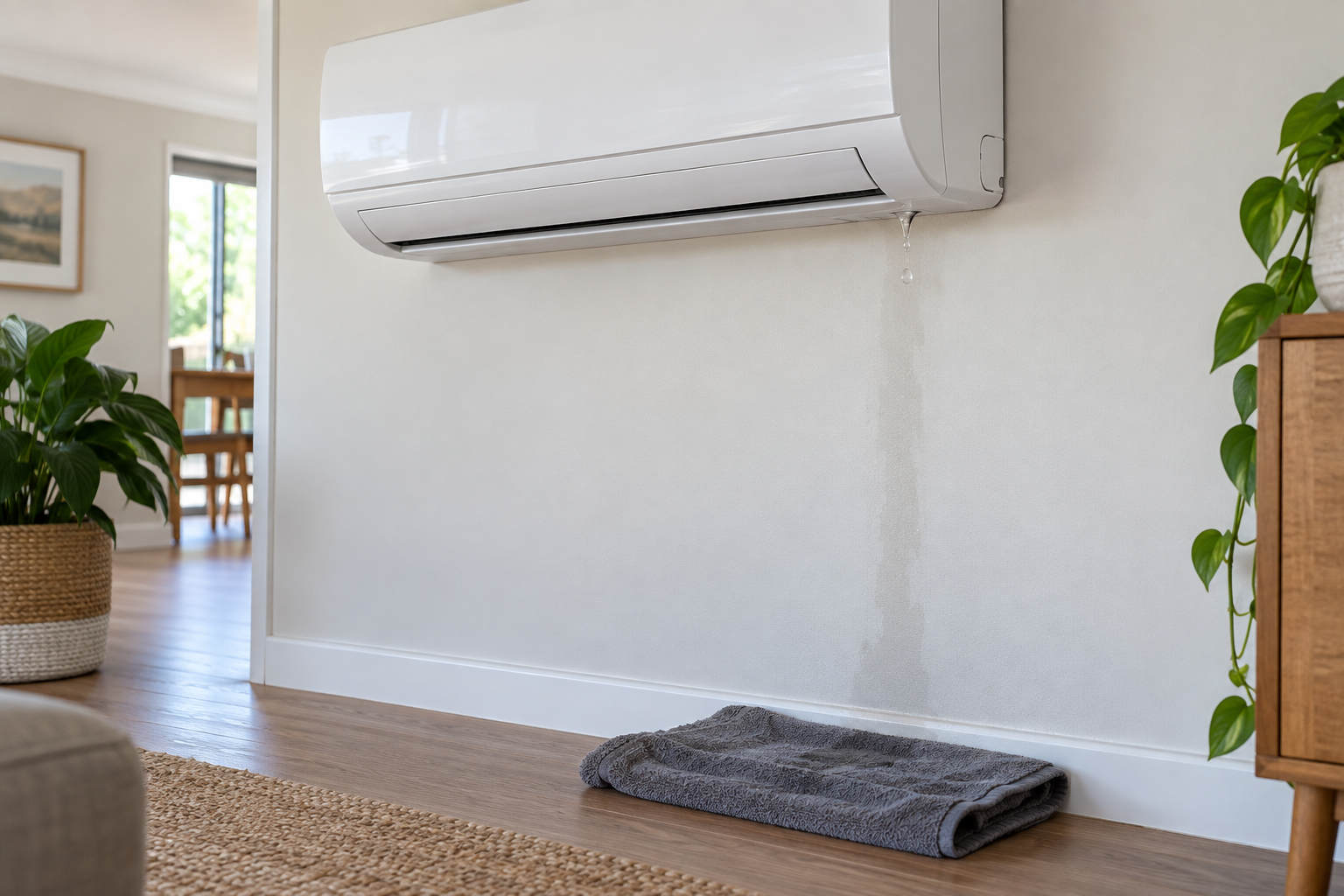
Water running down the wall beneath an air conditioner needs attention, even if the room still feels cool. A leaking indoor unit can wet furniture, flooring and wall finishes, and continuing to use it may allow the damage to spread. Stop the system and arrange an assessment rather than repeatedly restarting it to see whether the drip disappears.
Garden City Air provides air conditioning repairs in Toowoomba for residential and commercial systems. Understanding where the water appears and when it started helps explain the problem when you book. It does not replace inspection, because several different faults can produce a similar visible leak.
Why an air conditioner produces water
During cooling, moisture from indoor air can condense on the cold indoor coil. The system is designed to collect this water and carry it away through its drainage arrangement. Water leaving the intended outdoor drain outlet during cooling can therefore be part of normal operation.
Water escaping into the room is a different matter. It may mean collected water is not draining properly, or that condensation is occurring where it should not. A visible drip alone cannot identify the failed component or establish whether the problem is related to airflow, drainage or installation.
Also distinguish the indoor unit from the outdoor equipment. Some water around an outdoor unit can occur during normal operation, including heating and defrosting on suitable systems. If you are unsure whether the amount or location is normal, describe it to the service team and check the operating manual for your model.
What to do when the indoor unit starts leaking
Stop operation using the normal control if it is safe to do so. Keep clear of wet electrical equipment and do not touch switches with wet hands. If water is near electrical fittings, keep people away and seek qualified assistance. Do not reach into the unit or remove covers to investigate.
Move belongings out of the affected area where safe. A towel or container can help protect the floor from residual drips, but it should not become a reason to keep the air conditioner running. Keep the surrounding walking route clear so nobody slips or trips over the temporary protection.
Take a photograph from a safe position and note when the leak appeared. If the system displays a fault code or flashing indicator, record that too. Do not repeatedly switch it back on to reproduce the symptom. Manufacturer guidance treats water leaking from the indoor unit as a reason to stop operation and contact a service provider.
Drainage problems can have several causes
A restricted drainage path can prevent water from leaving the indoor unit as intended. Dust and other accumulated material may contribute to a blockage. Bends or problems with the drain arrangement can also affect drainage, so the visible outlet is only one part of the system that may need checking.
The technician may need to inspect the collection area and the route that carries water away. The access required depends on the installation. A wall-mounted split system and a concealed ducted unit do not present the same inspection conditions.
Avoid pushing wire into the drain, pouring chemicals into the unit or disconnecting pipework. These actions can damage components or create another leak. A drainage problem should be assessed using methods appropriate to the model and installation, with normal water flow checked after the work.
Airflow and moisture conditions also matter
Dirty filters and restricted airflow can affect system performance and contribute to condensation problems. That does not mean a leaking unit will necessarily be fixed by cleaning its filter. The technician needs to consider the symptoms together rather than assume one cause from the presence of water.
Record whether airflow had become weaker before the leak and whether you noticed unusual ice, noises or cooling performance. These observations may help the inspection. Leave any ice to the service team to assess; do not chip it away or apply heat to the equipment.
Indoor conditions are relevant too. Open doors and windows can allow humid air to enter a cooled room, and some operating conditions can increase condensation. Explain how the space was being used, particularly if the leak began during an unusually humid period. This context is useful, but indoor water leakage still warrants attention.
Help the technician prepare for the visit
Have the brand and model available if you can read them without climbing or opening the unit. Tell the team whether it is a wall-mounted split system, a ducted system or another type. Explain which room is affected and whether the water comes from the unit, an outlet or a nearby section of wall or ceiling.
Useful details include the time between switching on and noticing water, any recent service or installation work, and whether the problem has happened before. Mention damage already visible so access and the affected area can be discussed before arrival.
For a business or managed property, arrange access with the responsible person and identify any equipment or stock beneath the leak. Garden City Air also provides commercial air conditioning services in Toowoomba, where room access and operating hours can influence the repair arrangements.
Reducing the chance of another drainage issue
After the cause has been identified, ask what maintenance applies to your particular unit. Follow the manufacturer's instructions for accessible filter care and have internal cleaning or inspection performed by an appropriate technician. The safe method and frequency can vary with the equipment and how it is used.
Keep air inlets and outlets clear and make a note of any recurring symptoms. If a leak returns after repair, report the timing and location rather than assuming it is the same fault. Keep the service record and any advice about drainage or access with the system's operating information.
Routine servicing provides an opportunity to check drainage, airflow and general operation. It cannot guarantee that a unit will never leak, but it helps identify conditions that need attention before they cause a larger interruption.
Frequently asked questions
Can I keep using an air conditioner that drips indoors
Stop using it and arrange an assessment. A container beneath the unit does not resolve the cause or protect hidden surfaces. Water can continue escaping into places that are difficult to see.
Does an indoor water leak mean the refrigerant needs replacing
No. Water and refrigerant are different, and a visible water leak does not establish a refrigerant fault. Ask for diagnosis of the system rather than requesting a refrigerant top-up based only on the drip.
Is water from the outdoor drain always a problem
Water leaving the intended condensate drain during cooling may be normal. Unexpected water inside, a changed pattern or an outlet you cannot identify should be discussed with a technician. The model's manual provides useful operating guidance.
Will a filter clean fix the leak
It may address one contributing issue, but it will not resolve every drainage or installation problem. Once indoor leakage has occurred, stop operation and seek advice. Follow the recommended inspection and maintenance steps for the actual fault.
Book a Toowoomba air conditioning repair
If your indoor air conditioner is leaking, contact Garden City Air to discuss the symptoms and arrange an inspection. We provide service, fault finding and repairs across Toowoomba and the Darling Downs. Call (07) 4526 8024 or contact Garden City Air with the system details and photographs of the affected area.